White House
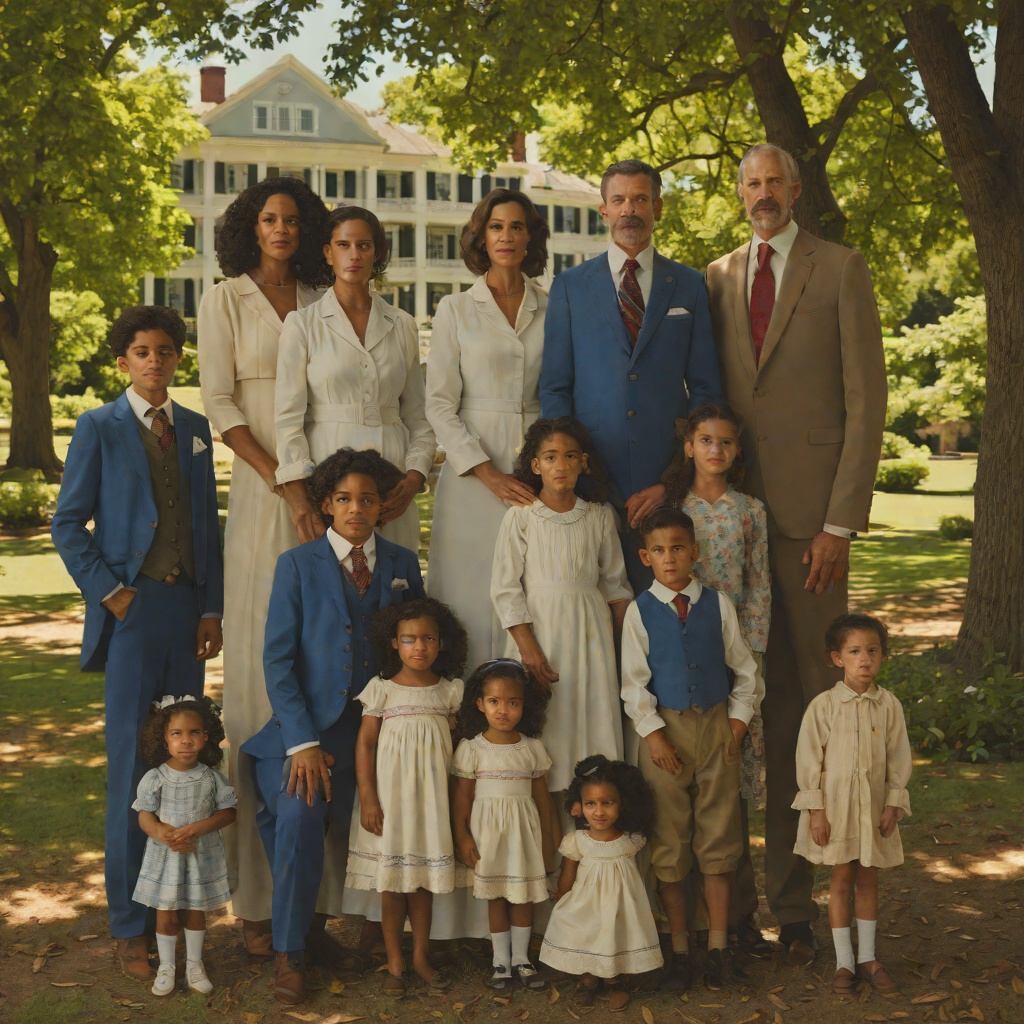
Red, White & Royal BlueThe White House is the novel's gravitational center, the official residence and workplace of the Claremont-Diaz family and the seat of President Ellen Claremont's administration. It is both a fortress of state power and a domestic home, a place where the most intimate moments of the First Family are lived under the constant watch of security teams, press officers, and the American public. As the primary setting for the romance between Alex Claremont-Diaz and Prince Henry, the White House functions as a space of contradiction: it is the site of their first kiss, their secret meetings, and their most vulnerable confessions, yet it is also the building whose private email server would be breached, leading to the Waterloo Letters scandal that nearly destroys them both. The building's dual nature—as a symbol of national authority and as a private residence—mirrors the central tension of the novel: the struggle to reconcile personal truth with public duty.
The Residence and Its Secret Spaces
The White House is more than a backdrop; it is a character in its own right, with its own hidden geography. On the roof, tucked into a corner of the Promenade near the Solarium, there is a bit of loose paneling that can be peeled back to reveal a message etched underneath with the tip of a key or a stolen West Wing letter opener. The inscription reads: "RULE #1: DON'T GET CAUGHT." In the secret history of First Families, there is no definite answer for who wrote it, though some swear it was Jack Ford, with his Hendrix records and split-level room attached to the roof for late-night smoke breaks, while others say it was a young Luci Johnson, thick ribbon in her hair. Alex discovered it within his first week of living there and has never told anyone how. The mantra becomes a guiding principle for his secret relationship with Henry, a private joke and a warning that haunts their every stolen moment. The East and West Bedrooms on the second floor are generally reserved for the First Family, first designated as one giant state bedroom for visits from the Marquis de Lafayette in the Monroe administration before being split. Alex has the East, across from the Treaty Room, and June uses the West, next to the elevator. Alex's room, with its ancient fireplace and carved mantel almost as old as the country itself, becomes the site of his first sexual encounter with Henry, a moment he prepares for by moving his campaign files from the bed to the desk and straightening the bedspread, dimly lit by a single lamp in the corner by the couch.
The White House Trio and the Politics of Image
The White House is also the stage for the carefully manufactured public image of the First Family. The White House Trio—the nickname for Alex, June, and Nora coined by People shortly before the inauguration—was in actuality carefully tested with focus groups by the White House press team and fed directly to the magazine. Politics, the novel notes, is calculating even in hashtags. Before the Claremonts, the Kennedys and Clintons shielded the First Offspring from the press, giving them privacy to go through awkward phases and organic childhood experiences. Sasha and Malia were hounded and picked apart by the press before they were out of high school. The White House Trio got ahead of the narrative before anyone could do the same, presenting three attractive, bright, charismatic, marketable millennials as celebrities in their own right. It is not ideal, Ellen Claremont always says, but it works. This manufactured image makes the White House a space of performance, where even the most personal moments are curated for public consumption, setting the stage for the scandal that would later threaten to unravel everything.
The Waterloo Letters Scandal and the White House's Silence
The White House becomes the epicenter of a political and personal crisis when the Daily Mail publishes emails and photographs revealing Alex's romantic and sexual relationship with Prince Henry, which had been ongoing since at least February of that year. The full email transcripts are uploaded to WikiLeaks under the moniker "The Waterloo Letters," seemingly named for a reference to the Waterloo Vase in the Buckingham Palace Gardens in one email composed by Henry. The correspondence appears to have been lifted from a private email server used by residents of the White House. As security experts within the FBI and the Claremont administration scramble to find the sources that provided the British tabloid with evidence of the affair, the usually high-profile First Family shuts down, with no official statement from the First Son. White House Press Secretary Davis Sutherland issues a brief prepared statement, saying, "The First Family has always and continues to keep their personal lives separate from the political and diplomatic dealings of the presidency. They ask for patience and understanding from the American people as they handle this very private matter." Republican presidential candidate Senator Jeffrey Richards seizes on the scandal, expressing concern about the private email server and demanding to know what other information was being disseminated on it. The White House, once a symbol of control and image management, becomes a site of vulnerability and exposure.
The Diplomatic Reception Room and the Coming-Out Speech
In the aftermath of the scandal, the White House becomes the stage for Alex's historic coming-out speech. The press briefing room in the West Wing is ruled too impersonal, so the press pool is called to the Diplomatic Reception Room on the ground floor, the room where FDR once recorded his fireside chats. Alex walks in there to make a speech and hope the country doesn't hate him for the truth. Henry is flown in from London for the telecast, positioned right at Alex's shoulder, steady and sure, the emblematic politician's spouse. On October 2, 2020, the whole world watches as Alex delivers the speech written by June, transforming the White House from a site of concealment into a stage for public truth. The choice of the Diplomatic Reception Room is significant: it is a space historically associated with presidential communication and national address, and Alex's speech there marks a turning point in the novel, as the private romance becomes a public declaration.
The White House as a Site of Family and Transformation
The White House is also the setting for key family moments that reveal the personal dynamics of the Claremont-Diaz family. When Ellen Claremont learns of her son's relationship, she clears the room with a flat command, saying, "Was I not clear? Everyone, out, now. I need to talk to my son." The scene underscores the White House as a space where the personal and the political are inextricably intertwined, where even a mother-son conversation requires the evacuation of advisors and staff. The White House is also where Alex's stepfather Leo is found fiddling with the wiring of electronics, eccentric millionaire inventor habits dying hard, and where Ellen kicks off her heels into the corner and throws her phone after them, asking, "Why did y'all let me run for president?" These domestic moments humanize the First Family, showing that the White House is not just a symbol of power but a home where people argue, laugh, and love. By the end of the novel, the White House has been transformed by the events that took place within its walls. The building that once housed the secret mantra "RULE #1: DON'T GET CAUGHT" becomes the site of a public declaration of love, and the First Family that once manufactured its image through focus groups becomes a family that embraces its members' truths. The White House, in the end, is not just a political landmark but a witness to the personal history of the people who live there, a space where the private and the public, the secret and the declared, are forever intertwined.